

Ahead of the Curve | How OIC Supports Student Wellbeing Beyond the Classroom


Supporting Student Wellbeing: Thriving When Starting a New School Abroad
Moving to a new school in a different country represents one of life's most transformative experiences. For international students aged 14–18, the opportunity to study in the UK opens doors to world-class education, cultural enrichment, and personal growth that will shape their futures. Yet alongside this excitement comes natural apprehension—and rightly so.
The transition involves far more than simply changing schools. Students must adapt to an entirely new academic system, navigate unfamiliar social and cultural environments, and often live independently for the first time, thousands of miles from their family support networks. Parents, too, face the challenge of supporting their children from afar while trusting others to provide the care and guidance they've always given.
These pressures are real and valid. However, when schools prioritise comprehensive wellbeing support and pastoral care, students don't just survive this transition,they thrive in ways that surprise even themselves. The foundation for this success lies in understanding that student wellbeing is not an add-on to education; it's the bedrock upon which all meaningful learning and personal development occurs. At Oxford International College, we believe just this, where boarding life and wellbeing support is the foundaction on which academic excellence can be achieved.
Understanding Student Wellbeing in Transition
Student wellbeing encompasses far more than academic performance. It represents the delicate balance between emotional stability, social connection, and academic confidence, all while navigating significant personal change. For international students, this balance becomes even more critical as they simultaneously manage multiple transitions.
The most common challenges include homesickness that ebbs and flows unpredictably, often striking hardest during quiet moments or cultural celebrations. Cultural adjustment extends beyond obvious differences to subtle social cues, communication styles, and academic expectations that can leave even confident students feeling uncertain. Meanwhile, academic pressure intensifies as students adapt to new teaching methods, assessment styles, and perhaps instruction in what may be their second or third language.
Building new friendships presents its own complexity. Students must forge meaningful connections while potentially feeling like outsiders, navigating different social dynamics and cultural backgrounds among their peers. The weight of family expectations, often significant financial sacrifices to provide this education, can create additional pressure to succeed immediately.
Proactive safeguarding becomes essential in this context. True safeguarding means more than physical safety; it encompasses creating an environment where students feel emotionally secure, culturally respected, and socially included from the moment they arrive. When students feel genuinely safe and supported, they can focus their energy on learning and growth rather than simply surviving each day.
The Role of Pastoral Care in Thriving Students
Effective pastoral care in our international school setting requires a sophisticated understanding of the unique pressures these students face. It moves far beyond crisis intervention to create a proactive support network that anticipates challenges and builds resilience before problems arise.
The most successful approaches include regular one-to-one check-ins that go deeper than academic progress. Skilled pastoral and boarding staff recognise the subtle signs that a student might be struggling, changes in participation, social withdrawal, or declining self-care,and respond with appropriate support before small concerns become significant obstacles.
Accessible emotional and academic support services must be embedded into daily school life. This means having counsellors who understand cultural transitions, academic mentors who can bridge different educational systems, and peer support networks that celebrate diversity while building genuine community.
Guidance on cultural and social adaptation proves invaluable. This includes everything from practical support with local customs and communication styles to deeper assistance with identity questions that arise when living between cultures. Students need space to maintain connections to their home cultures while embracing new experiences and perspectives.
At OIC we integrate these supports through dedicated strategy tutors, boarding mentors as part of a bespoke pastoral team,who know their students as individuals, not just academic performers. These relationships provide consistency and advocacy throughout a student's journey. Structured induction programmes ease the transition by providing clear expectations, introducing support systems, and creating early opportunities for connection and belonging.
Wellbeing initiatives that promote balance, resilience, and confidence become part of the school's DNA. Rather than treating student support as separate from academic life, the most effective approaches weave emotional and social development into every aspect of the school experience.
Particularly in the less structured hours of College life in boarding, expertly trained, professional practioners are committed to supporting all those in their care and complete regular training around the acknowledging and supporting culture shock, supporting students with complex needs and the science behind the importance of sleep in both wellbeing as well as academic outcomes.
Why Boarding Matters
For international students, boarding provides far more than accommodation, it creates a comprehensive support ecosystem that operates around the clock. This becomes particularly crucial for students whose families may be in different time zones, making immediate support challenging during difficult moments.
Boarding environments offer unique advantages in creating stability and belonging. Students develop deep friendships through shared daily experiences, from study sessions to late-night conversations that help process the day's challenges. The residential community becomes a chosen family, providing emotional support and cultural exchange that enriches everyone involved.
The independence that our boarding provision at OIC fosters proves invaluable preparation for university and adult life. Students learn to manage their time, make decisions, and solve problems while still having guidance and support readily available. This scaffolded independence builds genuine confidence rather than anxiety about future challenges.
When evaluating boarding provision, families should look for trained residential staff available at all hours, not just during traditional school times. Which is exactly what we provide with 24/7 support from our highly trained and professional boarding houseparent team. Clear safeguarding frameworks must be transparent and robust, with regular communication channels that keep parents informed and involved in their child's residential experience.
The most effective boarding schools ensure strong integration between academic, pastoral, and residential teams. This means our teachers, strategy tutors, and boarding staff communicate regularly about each student's holistic progress, ensuring no one falls through cracks between different aspects of school life. Additional support through our Head of Years, Counsellors and Nursing teams add to high levels of easily accessible professionals to support the full range of wellbeing support each individual child requires.
Quality boarding transforms what could be a challenging separation into an opportunity for growth, friendship-building, and developing the independence and resilience that will serve students throughout their lives at University and beyond
Building Resilience and Belonging
Successfully transitioning to international education requires intentional strategies that students, families, and schools can implement together. These approaches help build the resilience and sense of belonging that enable students to move from surviving to thriving.
Establishing routines provides crucial stability during uncertain times. This includes academic routines that help manage workload and expectations, but also personal routines for exercise, relaxation, sleep and maintaining connections with home. These patterns create predictability and control when everything else feels new and uncertain.
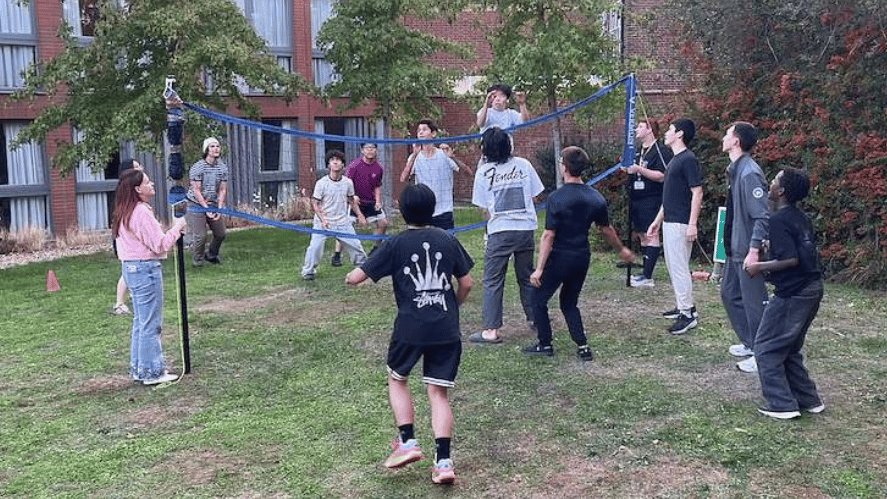
Participation in extracurricular activities and cultural events offers multiple benefits beyond enjoyment. These activities provide natural opportunities to meet like-minded peers, develop skills outside academics, and gradually build confidence in new environments. Whether joining the debating society, football team, or music groups, these connections often become the foundation of lasting friendships at our College
Peer networks and mentoring schemes create structured opportunities for support and guidance. Older students who've successfully navigated similar transitions can offer practical advice and emotional support that resonates in ways adult guidance sometimes cannot. These relationships often develop into meaningful friendships that extend far beyond school years.
Open communication between students, parents and guardians, and pastoral teams creates a triangle of support that strengthens everyone involved. Regular updates help parents feel connected to their child's experience while enabling school staff to understand family concerns and cultural considerations. Students benefit from knowing their support network extends beyond school boundaries while learning to advocate for their own needs.
Thriving in a New Chapter
Starting school abroad represents far more than an educational choice,it's an investment in personal transformation that will influence every aspect of a student's future. When students feel genuinely safe, supported, and empowered to be themselves while embracing new challenges, this transition becomes a foundation for lifelong confidence and global citizenship. The students who thrive are not necessarily those who find the transition easiest, but rather those who receive the right support at the right moments to develop resilience and person strength for life. They learn that challenges are opportunities for growth, that seeking help demonstrates wisdom rather than weakness, and that their diverse perspectives enrich not only their own experience but their entire school community. Ultimately, student wellbeing, comprehensive pastoral care, and thoughtful boarding provision create the conditions where academic excellence naturally flourishes. When students feel secure and supported, they can focus their energy on learning, growing, and discovering their potential rather than simply managing anxiety and uncertainty.For families considering this significant step, remember that choosing a school means selecting a community that will nurture your child through one of their most formative periods. The right environment doesn't eliminate challenges although it does provide the support, guidance, and encouragement that transforms those challenges into stepping stones toward an extraordinary future.
Related news
 News
News  News
News