


Leading With Purpose in the Age of AI
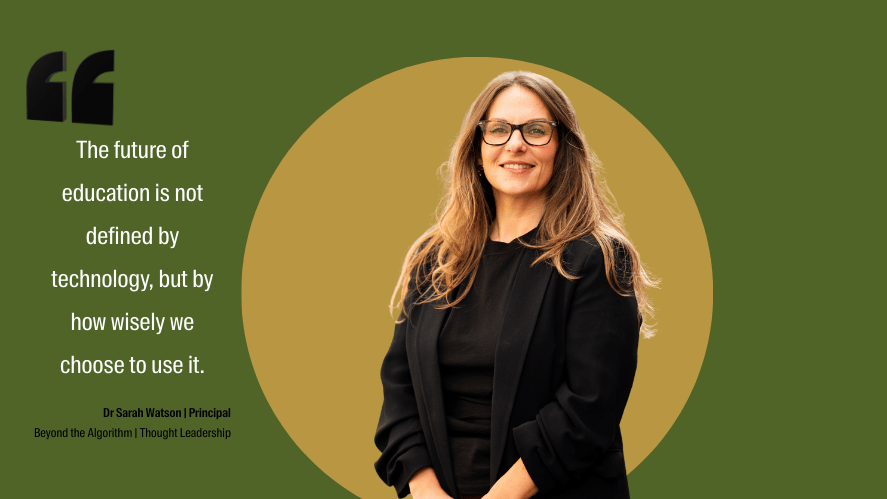

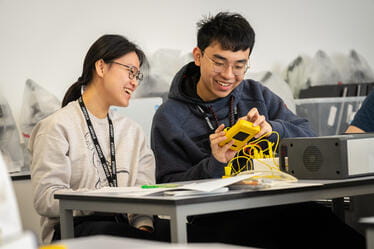
Education has always evolved alongside society. What feels different today is not simply the pace of change, but its scale. Artificial intelligence is no longer a distant concept or a specialist tool; it is reshaping how knowledge is accessed, how work is done, and how young people imagine their futures.
For schools, this moment presents a choice. We can react defensively, or we can lead thoughtfully. At Oxford International College, we believe leadership matters most at moments of acceleration. AI is not a challenge to be feared, nor a shortcut to be chased. It is a responsibility and an opportunity to reassert what education is truly for.
The purpose of education has never been to accumulate information. Today, information is abundant. The real challenge is cultivating wisdom: judgement, discernment, character and ambition. As technology becomes more powerful, the human dimensions of education become not less important, but more so.
What AI Changes — and What It Never Will
There is no denying that AI is changing how students learn. It influences how they research, plan, draft and revise. It can surface patterns in performance data, suggest next steps, and accelerate processes that once consumed hours of teacher time.
These changes are structural, not superficial. Like the internet before it, but moving faster, AI is reshaping classrooms, universities and workplaces simultaneously. Ignoring this reality would be irresponsible.
Yet it is equally important to be clear about what AI cannot replace.
It cannot inspire intellectual curiosity or build confidence in a student who doubts themselves. It cannot model integrity, challenge complacency, or recognise when a student needs encouragement rather than instruction. It cannot create belonging, trust or aspiration.
At OIC, education remains resolutely human-centred. Our teachers’ professional judgement, subject expertise and high expectations remain the foundation of everything we do. AI does not dilute rigour; when used wisely, it strengthens it. Technology supports learning, it does not define it.
For parents rightly asking whether academic standards and outcomes will remain high, the answer is unequivocal: yes. In fact, our ambition is not simply to maintain excellence, but to elevate it.
Excellence, Elevated: Using AI to Strengthen Outcomes
Academic results matter. They matter because they open doors to leading universities, to global opportunities, and to futures shaped by choice rather than limitation.
At OIC, AI is being adopted not as a novelty, but as a precision tool to support what we already know drives success: expert teaching, high-quality feedback and continuous improvement.
One of the most powerful opportunities lies in feedback. Decades of educational research show that timely, targeted feedback has a greater impact on progress than almost any other intervention. Yet feedback is also one of the most time-intensive aspects of teaching.
AI allows us to enhance this process intelligently. Used responsibly, it can support teachers in analysing assessments, identifying patterns and drafting formative insights enabling teachers to focus on what matters most: interpreting those insights, setting high standards, and guiding students through meaningful next steps.
This creates a virtuous cycle of improvement: assessment leads to insight; insight leads to expert feedback; feedback leads to focused action; and progress is then reviewed with clarity. Teachers remain the authors of judgement and expectation. AI supports consistency, speed and personalisation, never decision-making.
The result is learning that is more responsive, more individualised and more ambitious. It allows us to stretch our highest performers further, support students more precisely, and strengthen preparation for competitive university pathways across the UK, Europe, The Americas and Asia and beyond.
Preparing Students for an AI-Shaped World
If academic excellence is one pillar of education, character is the other. The students who will thrive in an AI-enabled world will not simply be those who can use tools efficiently. They will be those who can think independently, judge wisely and lead ethically.
At OIC, preparing students for this future means developing deep intellectual habits alongside emotional intelligence. Students must learn how to question outputs, recognise bias, verify sources and understand the limitations of automated systems. Equally, they must learn how to communicate clearly, collaborate respectfully and act with accountability in digital spaces.
Universities increasingly value these qualities. Global institutions are not seeking passive consumers of information, but curious thinkers with the confidence to challenge ideas and the integrity to use knowledge responsibly.
This is why AI literacy at OIC is embedded within a broader educational philosophy. Technology is contextualised, not centralised. Scholarship and character develop together. Students are encouraged to ask not just “what can this tool do?” but “why does this matter?” and “how should it be used?”
In doing so, we prepare young people not only for their next set of examinations, but for meaningful participation in a complex, interconnected world.
Teachers at the Centre of the Future
As conversations about AI grow louder, one truth remains constant: great schools are built on great teachers.
Our educators do what AI cannot. They challenge assumptions, notice nuance and adapt in real time. They build relationships that motivate students to aim higher than they thought possible. They guide young people through uncertainty (academically and personally) with wisdom earned through experience.
AI does not replace this expertise; it amplifies it. By reducing administrative burden and enhancing insight, technology allows teachers to spend more time doing the work that matters most: mentoring, stretching and inspiring students.
At OIC, we invest deeply in our staff not only in training around new technologies, but in sustaining a professional culture rooted in excellence, reflection and care. The future of education depends not on tools alone, but on the people who use them thoughtfully.
Leading with Integrity
Innovation without values is not leadership. As AI becomes more influential, ethical considerations become more urgent.
Our approach at OIC is guided by clear principles: safeguarding, transparency, staff training and student wellbeing are non-negotiable. We are committed to evidence-led adoption, measuring success by learning quality, fairness and impact - not by novelty or speed.
We ask hard questions before embracing new systems. Does this enhance understanding? Does it support equity? Does it strengthen, rather than weaken, human judgement?
Leadership in education is not about chasing every new development. It is about discerning which innovations genuinely serve students and having the confidence to say no when they do not.
A Human-Led Future
AI will continue to evolve. Education must evolve with it but never lose sight of its purpose.
At Oxford International College, we believe the future of education is human-led and AI-enhanced. It is rigorous, ambitious and ethical. It delivers outstanding academic outcomes while developing thoughtful, globally minded individuals.
This article opens a wider conversation we will continue throughout this series, exploring wellbeing, safeguarding, academic feedback, admissions and boarding through the lens of responsible innovation.
Our commitment is clear. We will lead with clarity, confidence and care, ensuring that our students are not only successful in the world as it is, but prepared to shape the world as it becomes.
Related news
/beyond-the-algorithm-(2).png?h=499&iar=0&w=887&rev=1c3f1c7d2f01434e8cb5730f20cd43b4&hash=3B9EA9E27A2B3D6423671571F9495BCB) Blog
Blog  News
News 
.png?h=499&iar=0&w=887&rev=0d1cda6247144fcf93dc7c9259502ea9&hash=8562DDA9C15739C799CDB29EB46461F7)