
As artificial intelligence continues to reshape the world around us, parents are asking an increasingly important question: what skills will truly prepare young people for the future?

20 May, 2026
Why Human Thinking Matters More That Ever in the Age of AI
.png?h=499&iar=0&w=887&rev=08a7de3676c74546a22594441cc24fc9&hash=428F338EE57EF42320F20B123168CE3F)
A new global campaign from Nord Anglia Education, Skills AI Can’t Match, seeks to answer exactly that by placing human thinking, creativity, and judgement at the centre of a future-ready education.
At Oxford International College, we are proud to amplify this message and celebrate the important research partnership between Nord Anglia Education and Boston College that underpins the campaign.
At Oxford International College, we are proud to amplify this message and celebrate the important research partnership between Nord Anglia Education and Boston College that underpins the campaign.
Researching the Skills That Matter Most
Through a global collaboration with Boston College’s Lynch School of Education and Human Development, Nord Anglia Education has been exploring how children develop the thinking skills needed to thrive in an increasingly complex and AI-driven world.
The research focuses on metacognition, often described as “thinking about thinking”, and examines how students learn to reflect, question, solve problems independently, and approach uncertainty with confidence.
The findings are compelling. Developing these thinking skills helps young people:
- Strengthen critical thinking
- Unlock creativity
- Build independence and resilience
- Develop sound judgement
- Become more confident learners
These are not simply academic advantages. They are durable human capabilities that will remain essential in a world where information is instantly accessible through technology and AI.
Beyond Answers: Teaching Students How to Think
The campaign highlights a powerful shift in educational priorities. In a world where AI can provide answers in seconds, the true differentiator is no longer simply what students know, but how they think.
At Oxford International College, this philosophy strongly resonates with our own educational approach. Outstanding teaching is not about memorising information alone. It is about developing intellectually curious, reflective, and independent learners who can engage deeply with ideas and apply knowledge thoughtfully.
The campaign showcases classroom approaches that encourage students to:
- Explore multiple perspectives
- Reflect before responding
- Ask thoughtful questions
- Explain and justify their thinking
- Solve problems independently
Simple but powerful “thinking routines” embedded into everyday teaching help students develop the confidence to navigate ambiguity and complexity, skills increasingly valued by universities, employers, and society more broadly.
A Timely Conversation for Families
Nord Anglia Education’s campaign comes at a moment when conversations around AI and education are becoming more urgent for families across the world.
Parents are rightly considering what will help their children stand out in the future. While technology will continue to evolve rapidly, human qualities such as creativity, judgement, ethical reasoning, empathy, and critical thinking remain uniquely valuable.
The Skills AI Can’t Match campaign positions these capabilities at the heart of modern education and provides schools across the Nord Anglia network with a shared language to communicate their value.
Celebrating the Work of Teachers
Importantly, the campaign also recognises the role teachers play every day in nurturing these skills within their classrooms.
The development of curiosity, resilience, independence, and intellectual confidence does not happen accidentally. It is built through expert teaching, meaningful challenge, and thoughtful guidance over time.
At Oxford International College, we are proud to support an educational culture that values deep thinking, academic ambition, and the development of students as confident, capable individuals prepared for an unpredictable future.
As the research partnership between Nord Anglia Education and Boston College demonstrates, the future belongs not only to those who can access information, but to those who can think critically, question intelligently, and use knowledge wisely.
Related news
News image ![Boarding Beyond the Classroom - 18 September 2026 - Boarding This week]() News
News
 News
News Boarding Beyond the Classroom
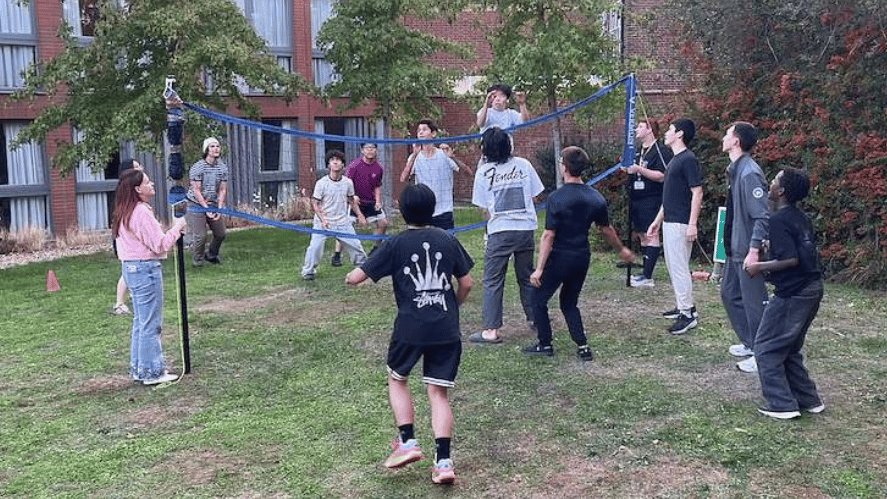
Oxford International College students enjoyed netball and air-dry clay making as part of the weekly boarding programme, combining sport, creativity, friendship and time to unwind.
News image ![Shortlisted for the John Locke Essay Prize - Shortlisted for the John Locke Essay Prize]() News
News
 News
News Shortlisted for the John Locke Essay Prize
An OIC student has been shortlisted for the 2026 John Locke Institute Global Essay Prize in Psychology, recognising exceptional academic writing, critical thinking and independent research.