From Ancient Herbalism to Modern Medicine
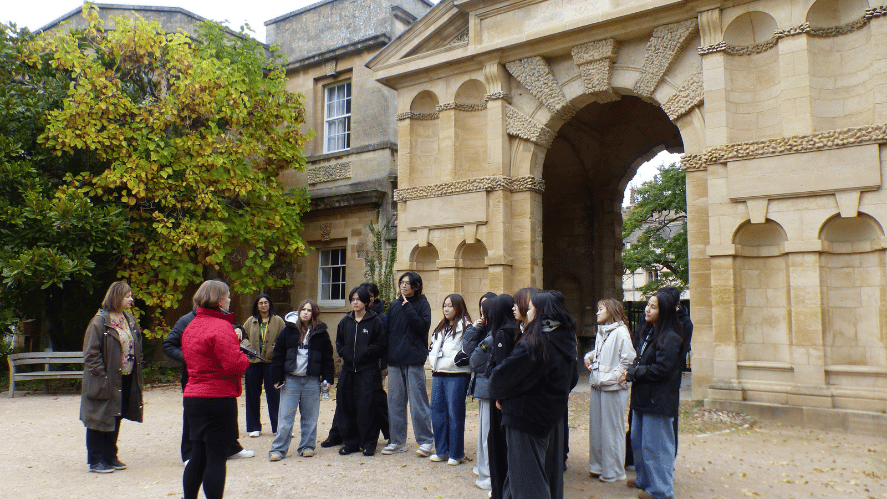
Throughout the visit, students explored the remarkable role plants have played in human history, from their earliest uses in herbal medicine to their modern applications in medical research and cancer treatment.
Inside the Botanic Garden's glasshouses, students examined a variety of economically important plants, including coffee, cacao, cotton, tea and sugar cane. These examples provided an opportunity to consider the global impact of cash crops, including their influence on agriculture, ecosystems and the environment.
Students also investigated some of the most significant threats facing biodiversity today, including invasive species, pollution, habitat loss, overharvesting, natural disasters and climate change.
The session highlighted an important message: while our planet supports extraordinary biodiversity, that diversity remains fragile and increasingly vulnerable to human activity.
Understanding the Importance of Conservation
An interesting part of the visit introduced students to the concept of 'plant blindness', the tendency to overlook plants and underestimate their importance within ecosystems and everyday life.
Students learned how Oxford University's Botanic Garden contributes to education, conservation and scientific research, including work to develop new plant varieties that could help strengthen global food security in response to a changing climate.
These discussions encouraged students to think beyond the classroom, considering how scientific research and conservation efforts can help address some of the world's most pressing environmental challenges.
Bringing Biology to Life
The visit provided a valuable opportunity for students to connect their A Level Biology studies with practical examples of biodiversity, sustainability and the relationship between humans and the natural world.
Experiences like this are an important part of learning at OIC, allowing students to engage with specialist researchers and explore the academic resources available in Oxford.
Thank you to Dr Lauren Daly and Oxford University Botanic Garden for delivering such an informative experience, and to Peter Merrow-Smith for organising this valuable opportunity for our Year 13 Biologists.