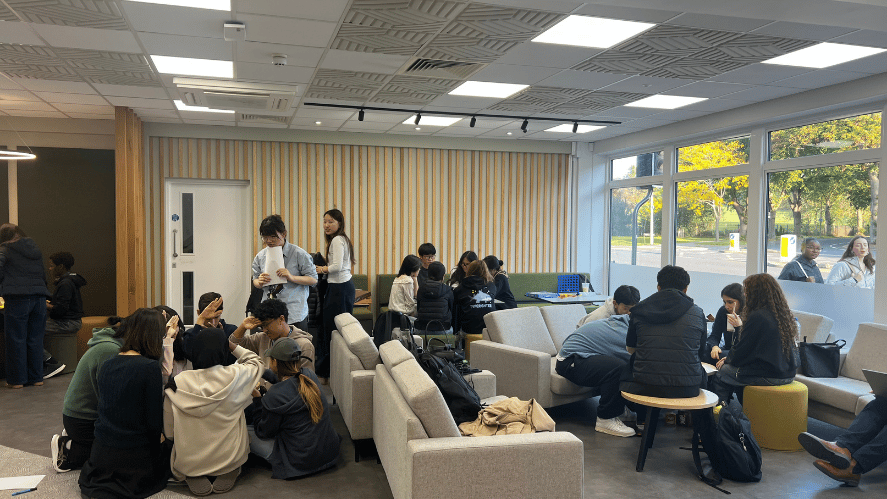

Year 12 students have been exploring how scientists turn observations into evidence through a hands-on Biology practical investigating the effect of temperature on maggot movement.

08 September, 2026
How Science Works Biology in Action
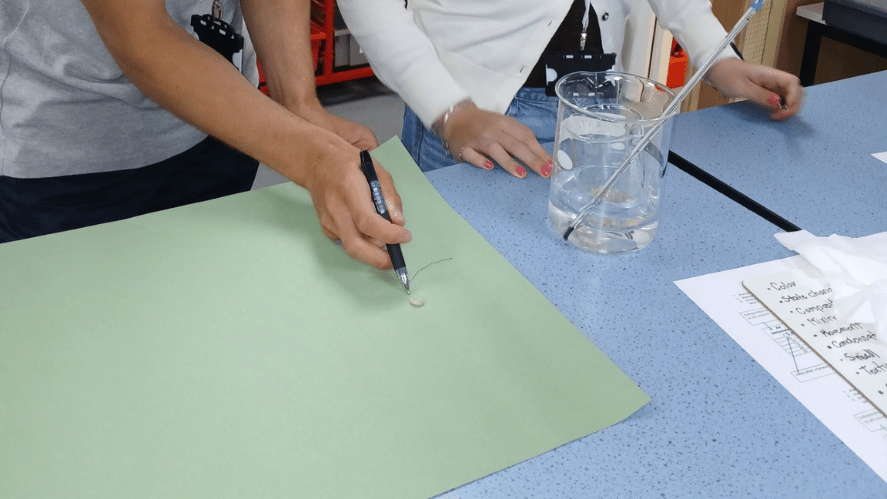
The experiment formed part of an introduction to “How Science Works”, giving students the opportunity to experience the scientific process rather than simply learning about it in theory.
Working at different temperatures, students observed the maggots and measured how far they travelled in one minute. By recording their results and comparing the distances, they were able to investigate whether changing the temperature affected the maggots’ activity.
The results showed a clear pattern: as the temperature increased, the maggots travelled further within the one-minute period.
As maggots are ectothermic, their body temperature and metabolic activity are influenced by the temperature of their surroundings. Within a suitable temperature range, warmer conditions can increase the rate of metabolic reactions and activity, helping to explain the increased movement observed during the experiment.
Learning How Science Works
While the maggots may have been the focus of the experiment, the practical was really about developing the skills behind scientific investigation.
Students had to consider variables, accurate measurement, data collection, reliability and how evidence can be used to support a conclusion. They could also consider the limitations of their method and how repeating measurements or controlling other variables could make their findings more reliable.
It was an engaging introduction to practical Biology and an important reminder that science is not simply about knowing the answer — it is about asking questions, testing ideas and using evidence to understand the world around us.
Related news
News image ![Amplify Week Beyond the Classroom - Amplify Week Beyond the Classroom]() Blog
Blog
 Blog
Blog Amplify Week: Beyond the Classroom
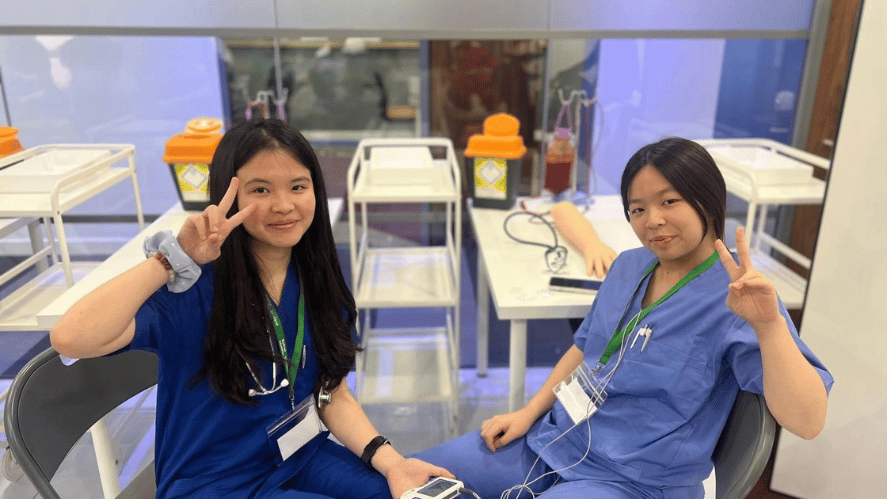
Discover OIC Amplify Week 2026, taking place from 24–31 October at Oxford International College. Students will explore supercurricular opportunities, STEM courses, university pathways and exciting activities designed to build skills, friendships and future ambitions.
News image ![Oxford International College ISI Inspection Report 2026 - ISI INSEPCTION REPORT 2026]() Blog
Blog
 Blog
Blog OIC Celebrates Positive 2026 ISI Inspection Report
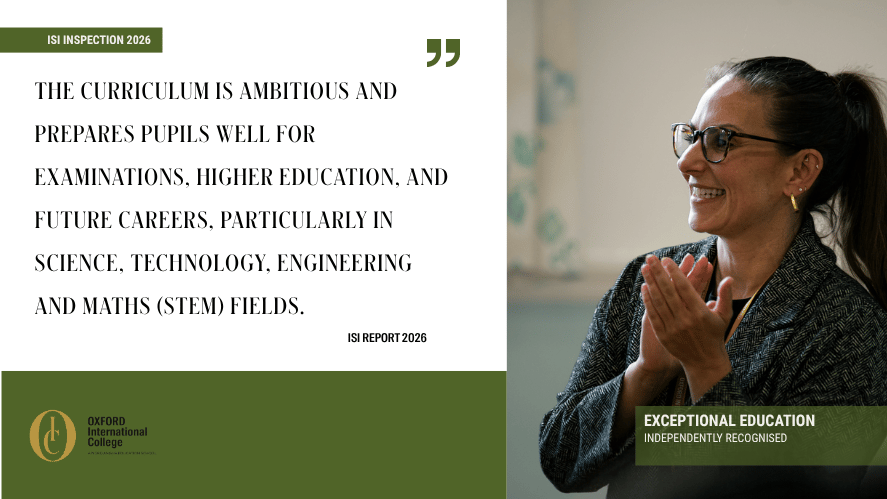
Oxford International College in Oxford has met all five regulatory areas in its latest Independent Schools Inspectorate (ISI) inspection, recognising the school's academic excellence, personalised university preparation, boarding provision and commitment to student wellbeing.