Creating a Realistic Interview Experience
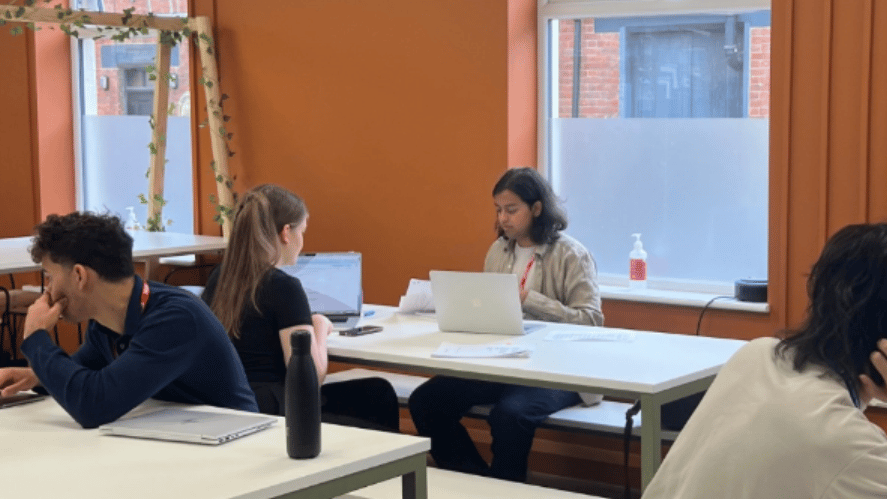
Interview clinics give students the opportunity to experience the types of questions, discussions and challenges they may encounter during a university interview.
Rather than memorising model answers, students are encouraged to think independently, explain their reasoning and approach unfamiliar problems with confidence.
Depending on their chosen university and degree subject, preparation may involve academic discussions, subject-specific questions, ethical scenarios or problem-solving exercises.
These sessions help students become more comfortable articulating their ideas, responding to follow-up questions and demonstrating how they think, rather than simply what they know.
Why Constructive Feedback Matters
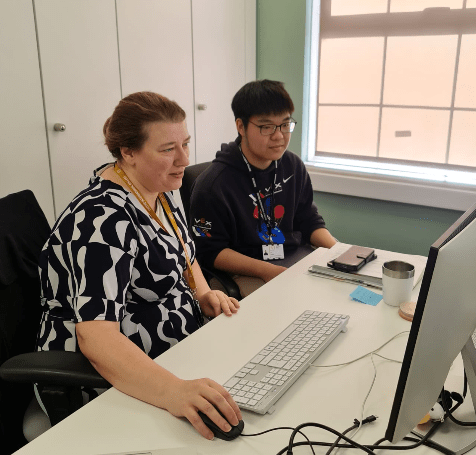
One of the most valuable aspects of an interview clinic is the opportunity to receive personalised feedback.
Students are encouraged to reflect on their performance, recognising their strengths while identifying areas for improvement. Feedback may focus on the clarity of their answers, depth of reasoning, communication skills, body language or ability to respond to challenging questions.
By putting this feedback into practice, students can gradually refine their interview techniques and develop greater confidence in their abilities.
Making mistakes during a practice interview is also an important part of the learning process. It provides an opportunity to recognise gaps in understanding, reconsider an approach and develop more effective responses in a supportive environment.
Best Practices for University Interview Preparation
While every university interview is different, there are several approaches students can take to strengthen their preparation and feel more confident on the day.
Know Your Subject Beyond the Curriculum
Competitive universities often look for evidence of genuine intellectual curiosity. Reading academic articles, exploring relevant research, listening to subject-specific podcasts and keeping up with developments in your chosen field can help you develop a broader understanding of your subject.
Consider what you have learned, why it interests you and whether it has challenged your existing perspectives.
Think Aloud and Explain Your Reasoning
In academic interviews, particularly for competitive courses, interviewers may be interested in how you arrive at an answer as much as the answer itself.
Explaining your thought process allows interviewers to understand how you approach problems, evaluate information and respond to new ideas.
If you are unsure of an answer, take a moment to consider the question, draw on your existing knowledge and work towards a reasoned response.
Revisit Your UCAS Personal Statement
Be prepared to discuss the experiences, books, research projects and academic interests mentioned in your UCAS personal statement.
Interviewers may ask you to expand on something you have written, explain what you learned from a particular experience or discuss how it influenced your decision to pursue your chosen degree.
Being able to reflect meaningfully on these experiences is more valuable than simply listing your achievements.
Practise, but Avoid Memorising Answers
Regular interview practice can help you become more comfortable responding to questions and communicating under pressure.
However, rehearsing answers word for word can make it difficult to adapt when an interviewer asks an unexpected question.
Instead, focus on developing a flexible approach to answering questions, supported by relevant examples, academic knowledge and personal reflection.
Listen Carefully and Be Open to Guidance
An interview is often an academic conversation rather than a series of questions with fixed answers.
Listen carefully, take time to process unfamiliar information and do not be afraid to ask for clarification when needed.
If an interviewer offers a different perspective or challenges your reasoning, consider their feedback and be willing to adapt your approach. Demonstrating that you are receptive to new ideas can be an important part of showing your potential as a university student.
Personalised Preparation Through Global Strategic Pathways
University interview preparation is closely connected to our Global Strategic Pathways, ensuring students receive guidance aligned with their individual academic interests and university ambitions.
Across Clinical & Life Sciences, Physical & Applied Sciences, Social & Commerce Sciences and Computational & Data Sciences, students are supported in developing the knowledge, communication skills and approaches relevant to their chosen disciplines.
For aspiring medical students, this may involve exploring medical ethics and practising Multiple Mini Interviews (MMIs). For students applying to Mathematics, Engineering or Computer Science, preparation may focus more closely on analytical reasoning and tackling unfamiliar academic problems.
Through personalised guidance from teachers, Strategy Tutors and university admissions specialists, students are encouraged to develop an interview approach that reflects their individual strengths and academic potential.
Building Confidence Beyond the Interview Room
The benefits of interview preparation extend far beyond securing a university place.
Learning to communicate ideas clearly, respond thoughtfully to challenges, accept constructive criticism and reflect on personal performance are valuable skills for higher education, future careers and everyday life.
Ultimately, a successful interview is not about having a perfect answer to every question. It is about demonstrating curiosity, adaptability, academic potential and a genuine willingness to learn.
Through regular practice, constructive feedback and personalised support, our interview clinics help students approach their university interviews with greater confidence, preparation and self-awareness.
Explore our Global Strategic Pathways and discover how we support students throughout their journey towards competitive university destinations.